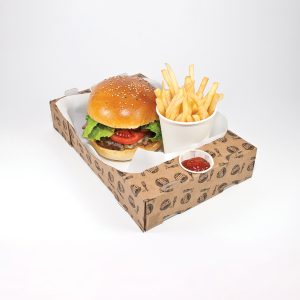
Most fry packaging looks alike in a product photo, but each format behaves differently once it is full of hot food. Start with how your customer eats. If they sit at a table, an open container that sits flat is easiest to dig into. If they walk away from a stadium stand or a food truck window, they need something they can hold in one hand while the other hand carries a drink.
Here is how the items in this collection split up:
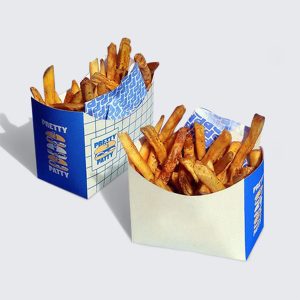
- French Fry Boxes are the familiar scoop shape with a tall back panel. They stand up on a tray, hold a regular or large portion and give you a big printed face that points straight at the customer.
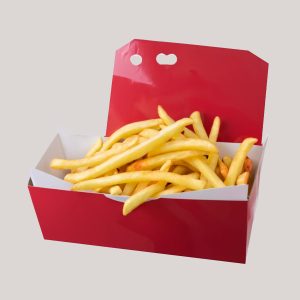
- French Fries Carton is a folded carton built for travel, so it suits drive-thru and delivery orders where fries sit in a bag for a few minutes before anyone eats them.
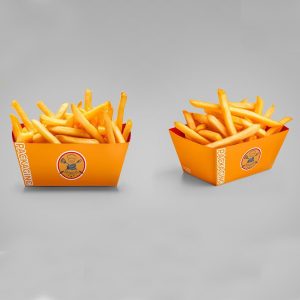
- French Fry Serving Containers and Custom French Fry Containers are open serving pieces for counters and table service. They work well for loaded fries, cheese fries or a side next to a burger.
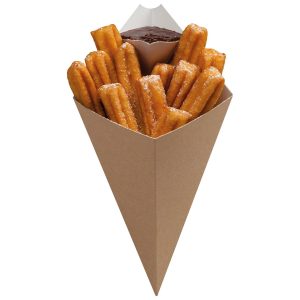
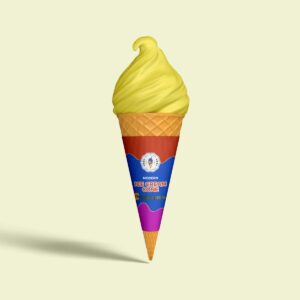
- Cone Fries Packaging sits in the hand like an ice cream cone. It is made for street food, Belgian-style frites and fairground stands.
- French Fries Holder Paper is a printed sheet, not a box. It lines baskets and trays and soaks up oil that would otherwise pool underneath.
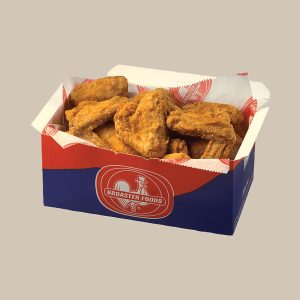
- Fried Chicken Packaging covers boxes for wings, tenders and bone-in pieces, which are heavier and wetter than fries.
If you can only stock one format, pick the one that matches your busiest order. A burger shop that sells most fries as a combo side gets more from a container that fits its trays than from a cone. A stand selling fries on their own, eaten on the sidewalk, should look at our printed cone fries packaging before anything else.
Fry and chicken packaging compared
Use this table to build a shortlist. Every item is sized to your portion, so read the portion column as a guide to what each format usually holds, not a fixed spec.
| Format | Best for | Usual portion | Usual stock | Eaten from the hand? |
|---|
| French fry boxes | Combo meals, counter pickup | Small to large fries | Paperboard | Yes, or set on a tray |
| French fries carton | Drive-thru, delivery, takeout bags | Regular to large fries | Paperboard or kraft | Yes |
| Serving containers | Table service, loaded fries, sides | Side portion to sharing size | Paperboard or kraft | Better on a table |
| Cone fries packaging | Walk-away street food, events | Single portion | Paperboard | Yes, built for it |
| Fries holder paper | Baskets and trays | Lines any basket | Food paper | No, sits in a basket |
| Fried chicken packaging | Wings, tenders, family meals | Snack box to multi-piece meal | Paperboard or corrugated | Carried, then eaten at a table |
Paperboard, kraft or corrugated: choosing the board
Paperboard is the default for fry boxes. It folds cleanly, takes full-color print well and is stiff enough for a regular portion. A white paperboard face shows bright brand colors accurately, which matters when your logo is red or yellow and has to match the sign over your counter.
Kraft board has a brown, unbleached face. It hides small grease marks better than white stock and suits burger joints and barbecue places that already use brown bags and butcher paper. The trade-off is color: ink printed on brown looks darker and less saturated, so pale shades and thin gray text can vanish. Bold one- or two-color logos look best on kraft.
Corrugated cardboard is about weight. A box of eight chicken pieces or a family-size fries order puts real load on the base, and corrugated walls stop it sagging in the hand or crushing in a delivery bag. It uses more board per box, so most shops keep corrugated for big meal boxes and use paperboard for single sides.
All three come in FDA-compliant food-contact materials, with recyclable and biodegradable options. If oil soaks through on your heaviest items, try pairing the box with a sheet of printed fry paper before moving up to a thicker board. A liner is an easier fix than changing the whole box spec.
Designing for heat, steam and grease
Fry packaging has a short, hard life. Within seconds of leaving the fryer, your logo is dealing with hot food, salt, oil and steam, then a customer's fingers. A few habits keep the print looking clean down to the last fry:
- Keep the logo on the upper half of the front panel. The bottom third sits in oil and gets gripped the most.
- Use solid colors and large shapes rather than hairlines. A grease spot on a fine pattern looks like a print fault.
- Darker backgrounds hide marks. A deep red or black box stays presentable longer than a white one.
- Leave the inside plain or print a single flat color. Customers only see it once the fries are gone.
- Matte reads well under bright counter lights; gloss gives the outside a slightly wipeable surface.
Steam is the other enemy. Fries packed hot into a fully closed box go limp in minutes, which is why open scoops and cones are standard for fries eaten straight away and why takeout cartons often get die-cut vents. If you want gold, silver or rose-gold foil, embossing or spot UV, keep those effects on the outer face and away from fold lines, where foil can crack.
Fried chicken needs its own brief
Chicken is heavier than fries, holds more moisture and is often eaten later, at home or at an office lunch table. That changes what you ask of the box. You want a lid or tuck flap so boxes stack in a delivery bag, a base that does not flex when someone lifts the box by one end, and vents so the coating stays crisp on a twenty-minute drive. Handles help when a multi-piece meal goes out the door by hand.
Plan sizes around your menu board: a three-tender box, a wings box and a family meal each want a different footprint. Our custom fried chicken boxes can be made to each of those counts, and you can run the same artwork across all of them so the whole order looks like one set when it lands on the counter.
Planning and placing your order
- List each portion you sell, with a photo or the weight of a typical serving. That is what we size the box from.
- Mark which orders travel and which are eaten on the spot. Travel orders usually want a carton or a closing box.
- Choose the stock: paperboard for sides, kraft for a natural look, corrugated for heavy meals.
- Send your logo and brand colors, or use our free design help. Note any Pantone (PMS) colors you must match exactly.
- Ask for a free sample or prototype and fill it with real food at serving temperature.
- Approve the proof. Production takes 4–6 business days after approval, with rush options if you are opening soon.
- Set a reorder point. Count how many boxes you use in a busy week and reorder when stock falls to two or three weeks' worth.
The minimum order is 100 units and volume discounts apply as quantities rise, so many shops buy their highest-volume box in bulk and trial new formats in smaller runs. Shipping is free to the USA, Canada, the UK and Australia. You can also set the box size, material and finish with the step-by-step order form on this page before sending the quote form.
Where these boxes do the most work
Food trucks and stadium stands go through cones and open boxes fastest, because customers eat standing up. Burger restaurants and diners lean on containers that sit neatly on their trays. Delivery-heavy kitchens need cartons and closing chicken boxes that survive a bag ride. County fairs, carnivals and summer festivals are cone season, and a big game or a local event is a good excuse to print a limited design for a single run. If your menu also covers burgers, hot dogs or nachos, the custom food trays collection lets you serve the whole meal in one matching look.



 Ice Cream Cone Sleeves
 Waffle Cone Sleeves
 Ice Cream Cone Wrappers
 Crepe Cone Packaging
 Sugar Cone Sleeves
 Custom Printed Coffee Sleeves
 Cake Cone Sleeves
 Cardboard Cone Sleeves
 Black Cone Sleeve
 Child Size Waffle Cone Sleeves
 Paper Cone Sleeves
 Small Cone Sleeves
 Eco-Friendly Cone Sleeves
 Aluminum Foil Cone Sleeves
 Two Color Cone Sleeves
 White Cone Sleeve
 Polka Cone Sleeves
 Abstract Cone Sleeves
 Rolled Cone Sleeves
 Chicken Cone Sleeves
 Custom Waffle Trays
 Ice Cream Cone Holder
 Paper Mache Cones
 Custom Bakery Trays
 Custom Cardboard Food Trays
 Custom Dessert Trays
 Custom Hot Dog Trays
 Ice Cream Cone Tray
 Custom Burger Trays
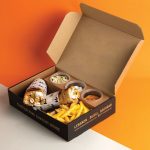 Custom Combo Meal Trays
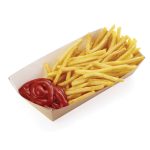 Custom Fries Trays
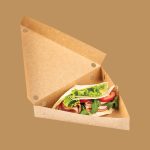 Custom Crepe Trays
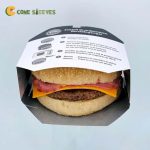 Burger Sleeves
 Custom Burrito Sleeves
 Custom Crepe Sleeves
 Custom Dessert Sleeves
 Custom Donut Sleeves
 Custom Tray And Sleeves
 Food Sleeves
 Chocolate Bar Sleeve Packaging
 Custom Bento Sleeves
 Custom Cupcake Sleeves
 Custom Die-Cut Sleeves
 Custom Hot Dog Sleeves
 Custom Cold Drink Sleeves