They serve a function beyond just a means of carrying food. Custom boxes offer convenience during transportation, enhance the appearance of your products and contribute to the overall image of your company with each sale. Business owners and managers in the food industry will be aware that the selection of serving dishes and trays is crucial. A good choice can enhance customer satisfaction and make running the business easier and more profitable. Below are the key points to consider when selecting serving trays which fit in with your menu, budget and business requirements.
Understanding Different Types of Food Trays
Specialty Dessert and Sweet Food Trays
Delicate pastries need packaging which safeguards their fragile nature and highlights their aesthetic appeal. Desserts to be served call for varied tray arrangements based on their presentation requirements, weight and shape.
Crepe and Thin Pancake Trays
Because of their folded roll presentation, crepes pose a unique packaging challenge. The dish should be supported by the crepe dish to prevent the delicate edges from being crushed or the fillings from escaping.
Key features for crepe trays:
- Shallow depth preventing compression
- Adequate width for folded presentations
- Grease-resistant coating for butter and syrup
- Compartments for toppings or accompaniments
Standard crepe tray dimensions:
| Size | Dimensions | Best For |
|---|---|---|
| Single serve | 7″ x 5″ x 1″ | Individual crepes, single fold |
| Large single | 9″ x 6″ x 1.5″ | Oversized crepes, extra toppings |
| Duo serving | 10″ x 7″ x 1.5″ | Two crepes or shared portions |
Custom crepe trays for serving crepes add a touch of class to any French-style street food vendor, not to mention serve the food in an efficient manner.
Waffle Service Packaging
Because of their crunchy texture and heaviness, waffles are best made on a non-breakable surface. The waffle tray should allow for the free passage of steam without the waffles becoming soggy, while retaining their shape.
Waffle tray requirements:
- Deep wells or raised sections supporting waffle thickness
- Ventilation preventing moisture accumulation
- A base for various toppings such as whipped cream, fruit or syrup
- Heat-resistant materials for fresh-off-the-iron service
Material considerations:
When choosing a hot dog tray material, consider that heavier toppings like fried chicken or ice cream are better served on sturdier cardboard constructions. Paper based trays are well suited to Belgian waffles and similar thicker hot dogs. It must withstand both moisture and heat without breaking.
Restaurants serving this popular breakfast food obtain advantage from custom waffle trays that keep the crispy waffle exterior that the customer enjoys as well as simplify waffle handling.
General Dessert Tray Applications
Versatile trays are required to display various cakes, pastries and other sweet things in general dessert service.
Common dessert tray uses:
- Individual pastries (croissants, danishes, muffins)
- Cake slices and layered desserts
- Cookie assortments and brownies
- Tarts and pies (individual or slice portions)
- Churros, donuts, and fried desserts
Design features for dessert trays:
Compartmentalization:
Different sections of the dish help prevent flavours from mixing, thus preserving the distinct taste of each ingredient. This is particularly relevant in the case of platters or assortment boxes.
Moisture barriers:
These are moisture barriers which will resist grease and are waterproof. This stops liquids and oils from getting through and it helps to keep food warm and maintain the presentation. This helps to keep the customer satisfied.
Aesthetic presentation:
The presentation of desserts is crucial as the majority of them are purchased on appearance. A tray designed specifically for desserts should draw attention to the items on display. Exhibit your products with windows or transparent lids to be displayed.
High end desserts require a presentation which begins with attractive boxes and wrappers. Custom dessert trays which may be customized are very versatile and so can be used in a wide range of sweet treats from buffet desserts to cakes on the go.
Ice Cream and Frozen Treat Trays
Frozen desserts are particularly difficult to manage using standard freezer trays, as the products are extremely sensitive to the high temperatures and melting which can easily occur.
Cone Service Trays
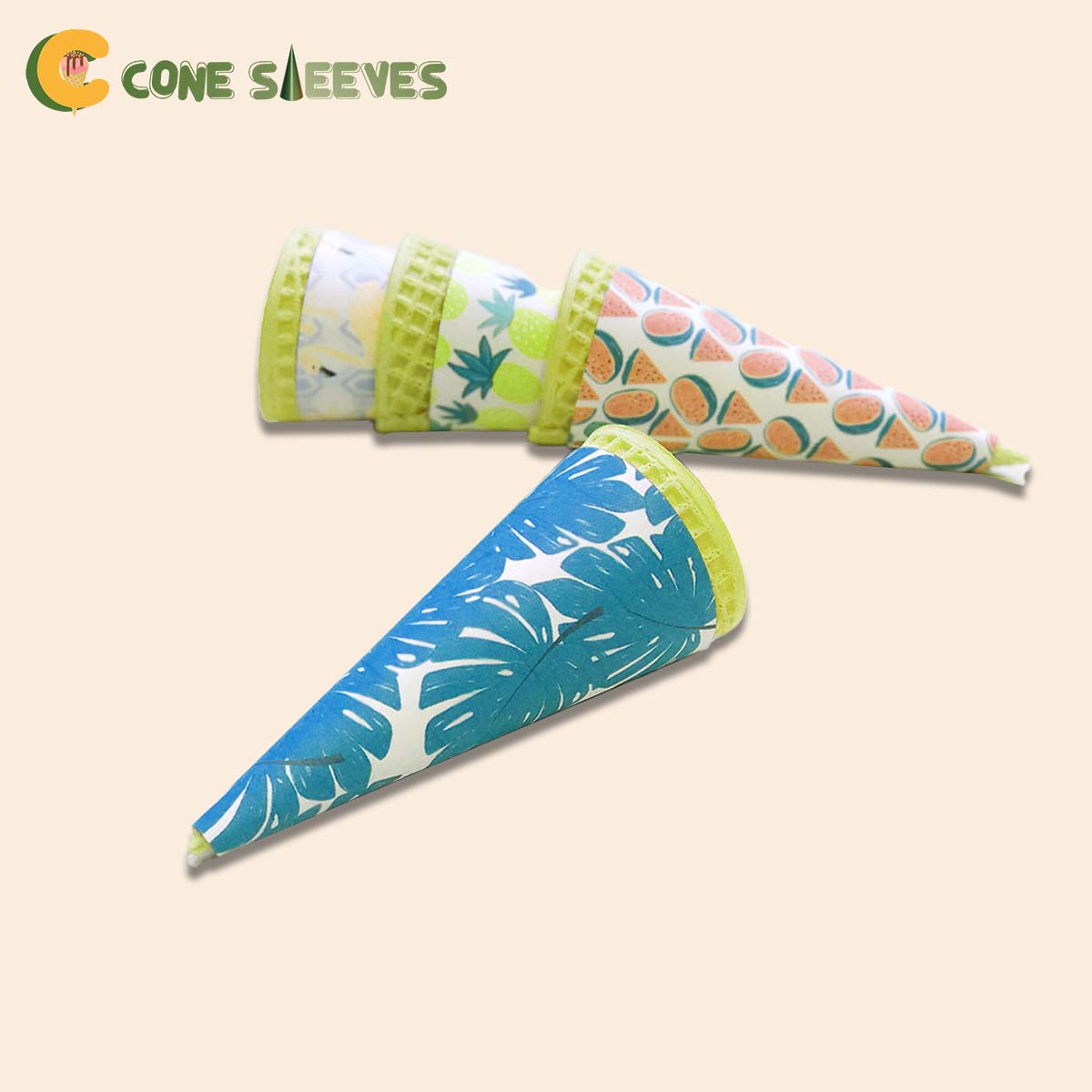
Ice cream cones must be held in holders that prevent drips and spills from occurring. They also have to be simple to handle for customers. The tray has to accommodate different cone sizes while stabilizing the narrow base of the cone.
Cone tray specifications:
- Circular or shaped cutouts fitting cone diameters
- A hole with a depth of 6 to 8 inches is typically sufficient for cones
- Its lightweight design also helps to prevent the bridge collapsing when it gets wet
- Multiple holder options for serving several cones
Material requirements:
The materials selected must be resistant to moisture as ice cream will inevitably drip and melt. Trays lined or coated with wax prevent the items placed upon them from coming into contact with water, which helps keep their shape. Some premium models offer the insulated property which keeps the frozen food colder for a bit longer.
Capacity considerations:
| Tray Type | Cone Capacity | Ideal Use |
|---|---|---|
| Single holder | 1 cone | Individual service, walk-up windows |
| Double holder | 2 cones | Couple or small group orders |
| Quad holder | 4 cones | Family portions, event service |
| Display tray | 6-12 cones | Catering, party service |
Dessert sellers and ice cream sellers require ice cream cone trays to maintain their business, to prevent waste and cone drops and provide a customer satisfaction by reducing cones being dropped.
Frozen Dessert Alternatives
Ice cream bars, frozen yogurt and ice lollies require separate trays to freeze.
Alternative frozen dessert packaging:
- Flat trays for ice cream sandwiches
- Stick holders for popsicles and frozen bars
- Cup holders for soft-serve and frozen yogurt
- Compartment trays for sundae components
Savory Food Service Trays
Burger and Sandwich Trays
When consuming burgers, individuals often utilize a tray to carry the food which includes messy components such as sauce. This tray allows users to conveniently lift and eat the burger. A hamburger bun must be designed to stop the underside becoming soggy yet keep toppings in place.
Burger tray essentials:
- Adequate depth containing condiments and toppings
- Grease-resistant coating handling meat juices
- Size matching burger dimensions (prevent sliding)
- They often have an optional divider between the burger and the sides so that customers can prevent their burger getting messy through their sides
Standard burger tray sizes:
- Regular burgers (3-4 oz patty): 6″ x 6″ x 2″ tray
- Large burgers (5-6 oz patty): 7″ x 7″ x 2.5″ tray
- Specialty burgers (8+ oz or stacked): 8″ x 8″ x 3″ tray
Combination tray benefits:
A number of fast food outlets find a combination tray useful. This is often because it has several sections into which the customer can place their meal accompaniments. With this approach products can be supplied in the original container, thus cutting down on packaging and waste.
Food trucks offering burgers and casual restaurants with fast service need custom burger trays made specifically for burgers. These will keep the burgers safe while at the same time clearly displaying the food quality and quantity.
General Cardboard Food Tray Applications
Burgers are just one of many items that can be served on a versatile cardboard tray. Such items are crucial to a restaurant which has a wide variety of dishes on its menu.
Common uses for general food trays:
- Hot dogs and sausages with toppings
- Tacos, quesadillas, and Mexican street food
- Pizza slices and flatbreads
- Fried foods (chicken tenders, fish, fries)
- Appetizer samplers and mixed platters
Material weight considerations:
Light-duty (150-200 GSM):
- Cold sandwiches and wraps
- Dry snacks and chips
- Lightweight pastries
- Low-grease foods
Medium-duty (200-300 GSM):
- Most hot foods and sandwiches
- Standard fried foods
- Pizza and flatbreads
- General restaurant applications
Heavy-duty (300-400 GSM):
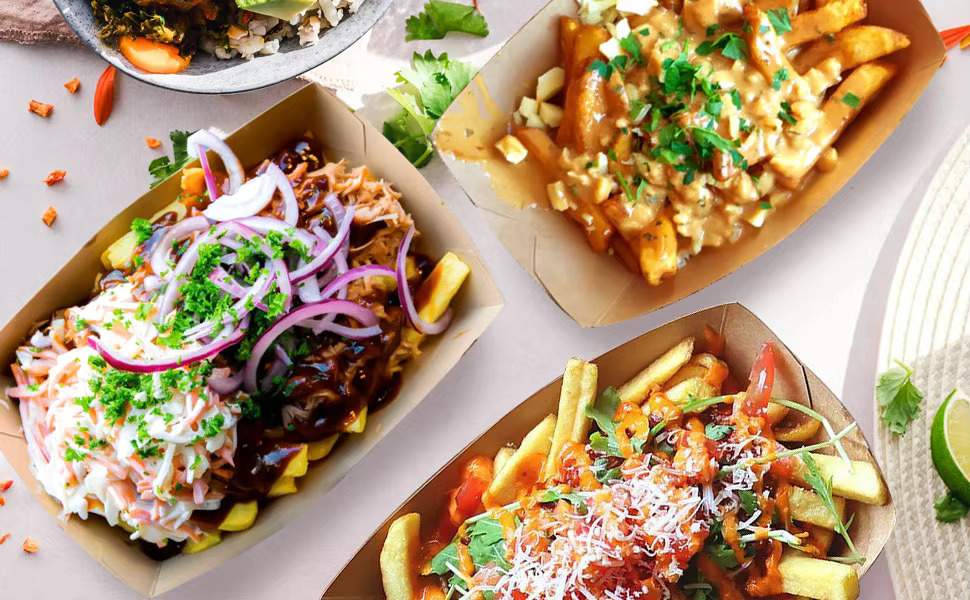
- Deep fried foods such as French fries and fried chicken are greasy
- Items such as burgers and BBQ sauces can be difficult to pack as they have a tendency to leak or spill
- Multiple-item combination plates
- Extended hold times
Custom cardboard food trays offer a number of benefits for businesses with varied menus or which sell seasonal products and require packaging flexibility.
Material Selection and Food Safety
Understanding Food-Safe Materials
Foodstuffs in contact with packaging must meet strict standards to prevent contamination of the foodstuffs or the migration of chemicals into foodstuffs.
FDA compliance requirements:
Bearing trays must be made from materials that comply with the FDA regulations for plastics used in food contact. This includes restrictions on:
- Heavy metals and toxic substances
- Chemical additives and coatings
- Recycled content (virgin materials required for direct contact)
- Migration testing proving no harmful transfer
Common food-safe materials:
Virgin paperboard:
- Brand new, highest safety standards met
- The new cartridge, which had been opened and used once for initial testing, contained 10^4 cfu/ml
- Only coatings and inks that have been approved by relevant authorities are used
- These paper towels are suitable for all types of food including the hot, greasy and acidic
PE (polyethylene) coated paperboard:
- The use of plastic linings in packaging materials creates a barrier against moisture and grease
- Bread the food lightly with ordinary crumbs, or with fresh or toasted breadcrumbs mixed with a little grated cheese and a pinch of salt
- Prevents liquid penetration
- Maintains structural integrity longer
PLA-coated materials are an option:
- Plant-based coating alternative to petroleum plastics
- Biodegradable and compostable
- They have good water resistance
- This product can safely keep foods at a temperature of 120 degrees Fahrenheit or lower
Wax-coated paperboard:
- Traditional coating for moisture resistance
- Best for cold or room-temperature foods
- They can become soft under heat
- Not suitable for microwaving
Grease and Moisture Resistance
The level of protection which trays require varies depending on the type of food that is to be served. This is important for food tray integrity and customer satisfaction.
Grease resistance ratings:
Different models of serving trays possess a range of grease resistance which is evaluated by standardized testing procedures.
| Resistance Level | Kit Rating | Suitable Foods |
|---|---|---|
| Low | Kit 1-3 | Dry foods, minimal oil contact |
| Medium | Kit 4-8 | Standard fast food, moderate grease |
| High | Kit 9-12 | Very greasy foods, extended contact |
Moisture barrier needs:
Minimal moisture foods:
- Dry sandwiches and wraps
- Pastries without wet fillings
- Chips and dry snacks
- Require basic moisture resistance
Moderate moisture foods:
- Juicy Beef Burgers served with standard condiments on a toasted bun
- Tacos with typical toppings
- Light sauces and dressings
- There is a need for medium moisture retarding materials
High moisture foods:
- When consuming Soups and Stews one requires a bowl or a cup
- Extra sauce or gravy
- Juicy fruits
- Demand maximum moisture protection
Temperature Tolerance
Dishes can be served from trays which can operate at different temperatures without the risk of structural or safety problems arising.
Hot food service requirements:
Standard hot foods (140-165°F):
The majority of ready to eat foods (140-165°F) are served hot on food trays without problems. For the desired holding period, the liner and packaging board maintains its integrity.
Very hot foods (165-200°F):
Extremely hot foods, which range in temperature from 165 to 200 degrees Fahrenheit, should be served on specialized dishes. These might include foods that are fried or have just been cooked on the barbecue. High quality PE or PLA waxes maintain their performance rather than low quality wax which may melt.
Cold food service considerations:
The storage of chilled products poses specific difficulties, particularly in maintaining the right humidity. Items frozen such as ice cream also cause the appearance of external moisture as temperature differences between air and trays lead to the formation of water droplets. Complete immersion in the water can be prevented by a coating on the tray, protecting the underlying structure.
Size and Portion Considerations
Matching Tray Size to Menu Items
Correctly proportioned plates prevent food from rolling around, which also reduces unnecessary packaging waste and expense.
Measurement guidelines:
Step 1: Measure your food item
- Length of longest dimension
- Width at widest point
- Height including toppings or stacking
Step 2: Add clearance space
- Margins: At least one half inch on all four sides of the page
- Items such as pizza, messy tacos and saucy fried chicken must be packaged at least 1 inch away from any other food
- Extra height for stackable or tall items
Step 3: Consider serving style
- Eat-in-hand items need less space
- People eat utensil foods in the dining room
- Shareable portions benefit from larger formats
Common sizing mistakes:
Too large: Waste of materials, increased cost, portions appearing smaller than they actually are, extra storage requirements and less eco-friendly.
Too small: Food hangs over edges, appears messy, customer handling difficulty, sauce/topping overflow, negative presentation impact.
Combination Trays and Compartments
Trays which can serve whole meals and have separate compartments are useful for a number of operations.
Compartment configurations:
Two-compartment trays:
- Main item plus single side
- They ordered a hamburger and a serving of fries
- Sandwich and chips
- Entree and vegetable
Three-compartment trays:
- Main item plus two sides
- Takeaways such as fried chicken with french fries and a side of coleslaw
- The staple foods of a Mexican meal consist of rice beans and tacos
- More complete meal service
Four+ compartment trays:
- Sampler or variety plates
- Kids’ meals with multiple small portions
- Appetizer assortments
- Condiment separation
Benefits of compartmentalized service:
Operational efficiency:
Working with a single tray minimizes the need for separate packing materials, thus reducing inventory needs, speeds up packaging processes and decreases costs overall.
Customer convenience:
The convenience that customers get from all items being contained in one box includes minimal hassle during the unpacking and handling processes. Additionally, there is a more tidy appearance when items are in the box together. Furthermore, these packaging boxes result in less waste for the customer to dispose of.
Food quality:
Individual foods stay separate from one another, so items which are crispy do not become wet and soggy, their intended texture is maintained, and so are their flavours, resulting in a higher quality meal.
Branding and Customization Options
Print and Design Opportunities
Custom printed inserts enable functional trays to act as marketing tools which promote the client’s brand with each use.
Printing methods:
Flexographic printing:
- Most common for food trays
- Cost-effective for medium to large runs
- 1-4 colors typically
- Good quality for logos and simple designs
Digital printing:
- Better for small quantities
- Full-color capability
- Higher per-unit cost
- Excellent for testing designs
Design elements to include:
Logo placement:
A logo can be viewed from multiple angles and still be easily identifiable through the use of a simple, non-directional shape. The top surface is what clients will see most of the time in an online shop and during product handling, and also when the product is shared via social media. The sides are useful for showing stacked items.
Contact information:
Include website, social media handles, phone number, or location information helping customers find you again.
Food photography or illustrations:
Fine art images of food on a restaurant’s menu or advertising materials can set a customer’s expectations regarding the appearance of their meal.
Brand messaging:
Emotional connections are created through taglines, a brand’s story or its unique selling proposition. These factors allow brands to establish a relationship with their clients beyond basic brand recognition.
Color Psychology in Food Service
The choice of color of the food packaging can often have a considerable impact on customer expectations of the food’s quality, taste and how the product is positioned in the market by the company.
Color associations in food service:
Red and yellow:
Fast food, quick service, appetite stimulation, energy and excitement. Fast food chains often utilize the colors of red, yellow and blue.
Green:
Healthy options, fresh ingredients, organic positioning, natural foods. Fast food chains and cafes which serve salads, smoothies and health related food are most often green.
Brown and kraft:
Artisan quality, handmade items, natural ingredients, eco-conscious values. Rustic coffee houses, farm-to-table restaurants and small bakeries generally utilize an earthy color palette.
Black and white:
The connotations of black and white are sleekness, refinement, contemporary style, high class. Upscale take-out restaurants along with high-end dessert stores select monochromatic color schemes.
Bright multi-color:
A vibrant eatery with a wide, colorful variety of foods: The menu is fun and suited for the whole family. It is diverse, too. The ice cream parlour and children’s party businesses make use of bright and bold visual themes.
Operational and Cost Considerations
Bulk Ordering and Inventory Management
When placing orders, care should be taken to ensure that stockroom storage space and cash flow needs are considered along with the prices.
Quantity price breaks:
At higher volumes the cost per unit for printed trays decreases substantially.
| Order Quantity | Typical Discount | Best For |
|---|---|---|
| 500-1,000 trays | Baseline pricing | Testing new items, seasonal specials |
| 1,000-2,500 trays | 15-25% discount | Small restaurants, weekly volume |
| 2,500-5,000 trays | 25-35% discount | Busy operations, monthly volume |
| 5,000-10,000 trays | 35-45% discount | High-volume restaurants, food trucks |
| 10,000+ trays | 45-55% discount | Multi-location operations, distributors |
Storage space calculations:
Containers which are flat-packed occupy less space than those which have been assembled.
Storage example:
- One thousand flat burger trays will take approximately two cubic feet of storage space
- One thousand assembled burger trays will take up the space of about eight to ten cubic feet
Inventory planning:
Calculate monthly usage:
To calculate the monthly requirements for a dispensing system calculate the average number of cups dispensed per day over a period of four to six weeks. This helps establish the baseline usage requirements for the organization.
Add safety buffer:
To ensure adequate stock levels an organization should order between 20-30% more stock than is normally required. This will help cover any unexpected busy periods.
Consider seasonal variation:
Depending on the time of year, the type of disposable trays needed may vary due to seasonal fluctuations in business. For example, businesses that sell ice cream may use certain types of trays during the summer months but different types in the winter when they are offering soups.
Balance storage capacity:
Storage capacity needs to be balanced: although higher storage capacity can mean greater discounts, it is only useful if you have space that is dry and secure to store your inventory in.
Environmental Impact and Sustainability
As consumer concern over the environmental impact of their actions grows, the green packaging option becomes a differentiator.
Eco-friendly material options:
Recycled content paperboard:
- Post-consumer recycled fibers
- Reduces virgin material demand
- This can be achieved at a similar price to the Virgin Media options
- Appeals to environmentally conscious customers
Compostable and biodegradable:
- Breaks down in commercial composting facilities
- PLA coatings from plant sources
- This product is often priced around 10-20% more than similar goods
- Strong marketing value
Recyclable after use:
- Corrugated board coated with a plastic layer of polyethylene
- It can be used in most municipal recycling programs
- Balance of performance and sustainability
- Wide availability and competitive pricing
Communicating sustainability:
On-tray messaging:
Label sustainability information: On-product labeling, including recycling symbols, composting instructions, or sustainability statements directly on packaging, can provide consumers with crucial information about the product’s environmental impact.
In-store signage:
Display information about disposal in your stores so customers will be aware of the process for your packaging materials.
Digital marketing:
Many businesses now use the web and other digital technologies to demonstrate their social and environmental credentials, using them as marketing tools to attract environmentally-aware consumers.
Testing and Quality Assurance
Sample Testing Before Bulk Orders
It is advisable to thoroughly test orders of any size in real service conditions, using actual menu items beforehand.
What to test:
Structural integrity:
- The trays were loaded with a standard portion size of the meal and snacks
- Carry and handle as customers would
- Wait for the usual amount of time that a service takes (fifteen to thirty minutes)
- Check for warping, soaking, or collapse
Temperature performance:
- Test with food at actual serving temperature
- Monitor how coating handles heat/cold
- Check for any material breakdown
- Verify no taste or odor transfer
Handling and transportation:
- Place in delivery bags or containers
- Simulate actual delivery conditions
- Test stackability if offering multiple items
- Verify ease of opening and eating
Customer experience:
- Have staff and trusted customers test
- Gather feedback on convenience
- Assess visual appeal and presentation
- Identify any handling difficulties
Quality Standards and Specifications
Ensuring consistency in the quality of all items supplied is crucial to maintaining customer confidence and to protect the reputation of your company.
Key specifications to define:
Material weight (GSM):
Specification for Paper Weight – Make sure the supplier does not substitute a lighter weight paper.
Coating type:
Application: Specify the intended use of the coated product, i.e. outdoor, indoor, wet conditions. Weight: State the weight of the coating you wish to apply.
Dimensions:
Specify drawings with tolerances of ±2 to 3mm.
Print quality:
Color Matching Standards and Print Quality Requirements. The required print quality should be specified by defining color matching standards. These standards cover acceptable print defects, minimum resolution requirements and other print characteristics.
Defect tolerances:
In house inspection procedures should include a statement that defines the proportion of defective items which the firm considers to be within acceptable limits.
Menu-Specific Tray Selection Guide
Matching Trays to Common Menu Categories
Breakfast Service:
- Crepes, pancakes, waffles: Shallow trays with grease resistance
- Breakfast sandwiches: Burger-style trays with compartments
- Pastries and baked goods: Dessert trays with minimal coating
- Breakfast burritos: Longer rectangular trays
Lunch and dinner mains:
- Burgers and sandwiches: Standard burger trays with side compartments
- Tacos and Mexican: Multi-compartment for sides and toppings
- Pizza slices: Triangular or rectangular depending on style
- Fried chicken: Deep trays with high grease resistance
Sides and appetizers:
- Fries and chips: Deep rectangular trays
- Onion rings and fried items: Shallow wide trays
- Salads: Bowls or deep trays with lids
- Dipping sauces: These dips can be served in small cups or directly from the serving dish, alongside the accompanying foods
Desserts and sweets:
- Ice cream cones: Specialized cone holders
- Cake and pastries: Flat dessert trays
- Cookies and brownies: Shallow trays or boxes
- Churros and fried desserts: Grease-resistant shallow trays
Working With Suppliers
Questions to Ask Suppliers
About materials and safety:
- Are all materials FDA-approved for food contact?
- What certifications do you provide?
- Can you supply material safety data sheets?
- What is the source of your paperboard?
About customization:
- What are your minimum order quantities for custom printing?
- What file formats do you require for artwork?
- How many colors can you print?
- What are lead times for custom orders?
About pricing and ordering:
- What quantity breaks affect pricing?
- Are there setup fees for custom printing?
- Our payment terms are cash with order or thirty days from date of invoice
- We do offer a variety of standard templates for different types of business: sole proprietor, partnership, S corporation, C corporation and LLC
About quality and service:
- What kind of defect rate are you expecting to see?
- How do you handle quality issues?
- Can you provide samples before ordering?
- What is your typical lead time?
The choice of custom food trays can impact on every level of your food service from the food itself to customer attitudes towards your business. This affects not just the presentation of your meals but also their quality. When choosing your serving dishes, first take into account the offerings on your menu, your service style, your clients’ expectations, and operational constraints.