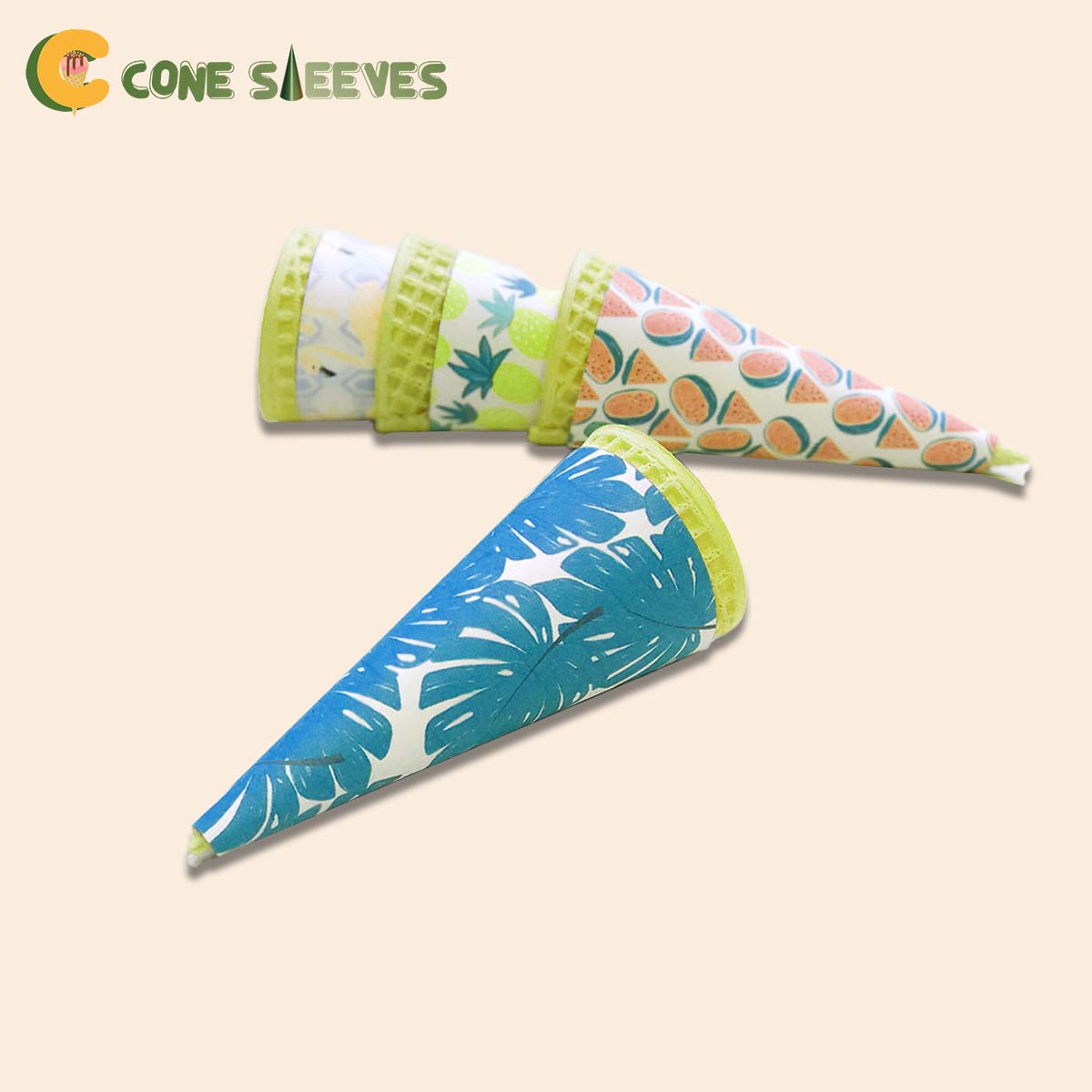

Street food vendors together with dessert shops must compete for the limited attention of their potential customers. The growing demand for crepe cones as portable snacks becomes a challenge because substandard packaging methods can damage the reputation of any recipe. Businesses need to understand typical design errors which enable them to develop protective packaging that also draws in customers.
What Is Crepe Cone Packaging?
The definition of crepe cone packaging refers to paper sleeves and holders and wraps which protect filled crepe cones from grease leakage while keeping them stable during eating (each unit costs between $0.08-$0.25 based on material and printing quality).
Who Needs Crepe Cone Packaging
Multiple business operations need high-quality packaging solutions.
-
Street food carts and mobile vendors
-
Dessert cafes specializing in crepes
-
Festival and event food stalls
-
Ice cream parlors offering crepe alternatives
-
Bakeries expanding into handheld desserts
Mistake 1: Using Wrong Paper Weight and Material
Insufficient Grease Resistance
Standard paper remains the preferred choice for vendors who do not apply grease-resistant coatings. The instant penetration of butter and chocolate and cream fillings through packaging creates immediate operational challenges. The product quality perception of customers deteriorates because they experience hand messes from the packaging.
Paper Weight Comparison
| Paper Type | Weight (GSM) | Grease Resistance | Best For | Cost per Unit |
|---|---|---|---|---|
| Standard paper | 60-80 | Poor | Dry items only | $0.05-$0.08 |
| Grease-proof paper | 35-45 | Good | Light fillings | $0.08-$0.12 |
| Wax-coated paper | 40-50 | Excellent | Heavy fillings | $0.12-$0.18 |
| PE-lined paper | 50-65 | Superior | All applications | $0.15-$0.25 |
When Material Choice Affects Business
The wrong paper selection allows grease to penetrate through packaging within 3-5 minutes. Customers link such packaging failures to food quality instead of recognizing them as packaging-related problems. The team at Cone Sleeves advises businesses to perform material tests with their specific products before making large orders because this helps determine the best paper types for different filling temperatures and oil contents.
How to Select Appropriate Materials
Test packaging with your exact fillings:
-
Place standard serving amounts into test sleeves
-
Maintain the sleeves naturally for 10 minutes
-
Check for grease spots or wetness
-
Check how the packaging maintains its shape when people touch it
-
Assess how easily customers can handle the product
Mistake 2: Ignoring Proper Size Specifications
Too Tight or Too Loose Fits
The process of inserting cones into undersized sleeves becomes challenging because it leads to tears and service delays during peak hours. The excessive size of sleeves enables cones to fall over or shift which results in filling leakage. The problems with packaging and serving create dissatisfaction among customers and staff members.
Standard Sizing Guidelines
The standard length of crepe cones ranges between 5-6 inches while their opening diameter ranges between 2-3 inches. A suitable sleeve length should extend 0.25-0.5 inches beyond the cone dimensions to create a comfortable fit without excessive space. The cost of custom sizes amounts to 15-20% higher than standard sizes but it minimizes waste from ill-fitting packaging.
Where Sizing Problems Appear
The speed of service operations decreases when the packaging dimensions do not match the product size.
-
Staff members need to spend additional time to adjust the sleeves properly
-
The staff needs to reposition the cones before they can serve them to customers
-
The product becomes hard to handle because of its design
-
The amount of filling exposed to the outside increases the risk of making a mess
Mistake 3: Poor Print Quality and Design Choices
Illegible Text and Graphics
The combination of small text with unnoticeable color differences and excessive design elements makes it impossible for customers to identify brand names and menu details. Text measurements below 10 points become unreadable when displayed on curved surfaces. The lack of clear visibility results in lost marketing potential.
Design Element Impact
| Design Feature | Customer Impact | Recommended Approach |
|---|---|---|
| Logo size | Brand recognition | Minimum 1.5 inches wide |
| Font size | Readability | 12-14 point minimum |
| Color contrast | Visibility | 70% contrast ratio |
| Background patterns | Focus | Simple or none |
| Information density | Comprehension | 3-4 elements maximum |
Why Print Quality Matters
Street vendors use their packaging to promote their business because they have limited access to conventional advertising methods. The appearance of unclear logos and faded colors indicates that the business maintains substandard operational standards. Professional printing adds $0.02-$0.05 to each unit cost but delivers substantial improvements in brand image quality.
How to Optimize Design
Follow these guidelines:
-
The text should use bold and simple fonts to enhance readability while using only 2-3 complementary colors in the design.
-
The logo should be placed in the front center position of the design.
-
Social media handles should be placed at the bottom of the design.
-
Designs should be tested at their actual printing size before production begins.
Mistake 4: Neglecting Structural Support Features
Missing Reinforcement Areas
The grip areas of paper sleeves require reinforcement because customers use these sections to handle their products. The absence of sufficient support causes sleeves to collapse when customers apply pressure while handling products that become heavier due to fillings. The result leads to unclean eating experiences which result in unfavorable customer feedback.
Support Features to Include
The following structural components help prevent product failures from occurring:
-
The design includes two reinforced grip areas for fingers
-
Scored lines for stress points
-
Bottom reinforcement panels
-
Side seam overlap of 0.5 inches
-
Top edge rolling for stability
When Structure Fails
The vendor team detects operational issues when business operations reach their peak point.
-
Staff members experience sleeve tears when they handle them fast
-
The weight causes the bottom section separates from the rest of the sleeve
-
The product experiences side seam failures when customers touch it
-
The weak paper areas of the cone tips allow them to poke through
How to Test Structural Integrity
The production process requires testing of sample sleeves with their maximum weight capacity before starting mass production.
-
The test requires filling sample sleeves with their maximum capacity before holding them for five minutes while walking
-
Apply normal gripping pressure
-
The inspection should focus on any signs of tearing or deformation in the product
-
The inspection should verify how well seams hold up when subjected to stress
Mistake 5: Overlooking Practical Handling Requirements
Difficult One-Handed Consumption
People who consume food on the go frequently do so while walking and shopping and using their phones. The design of packaging that needs two hands for stability will not pass practical usage tests. The combination of wide bases with textured grip zones and appropriate length enables users to eat comfortably with one hand.
Customer Demographics and Needs
The design requirements for different customer groups need separate evaluation.
-
Children between 5 and 12 years old need smaller sleeve sizes and shorter sleeve lengths.
-
Teenagers between 13 and 19 years old want fashionable designs and social media integration in their packaging.
-
The design should present a professional look while keeping the packaging area minimal for adults between 20 and 50 years old.
-
The design should focus on simple opening mechanisms and comfortable grip features for users aged 50 and above.
The Problems That Occur Because of Poor Handling Methods
The act of eating food while moving creates multiple difficulties.
-
The movement of walking leads to filling products shifting which results in spills.
-
People in standing crowds need to hold items in a space-efficient manner.
-
The design enables users to hold the product with one hand while keeping their phone accessible.
-
The design needs to include features that make it simple for customers to eat quickly.
Designing for Real Usage Requires the Following Approach
Designers should study how people use their products in real-world situations.
-
The addition of textured grip zones provides users with better control during handling.
-
The design should maintain equal weight distribution across its structure.
-
The design should incorporate entry points which enable users to take bites.
-
The packaging should contain absorbent materials inside its lining.
-
The testing process should involve real-world settings with groups of people who will use the product.
Cost Analysis of Avoiding Mistakes
Mistake Costs
-
The combination of grease leakage with customer dissatisfaction and damaged business reputation occurs.
-
The production of incorrect sizes leads to discarded stock and additional purchase costs for replacement items.
-
The quality of printing affects both brand recognition and professional image because of its impact on branding opportunities.
-
The weak structure of the product results in product waste and customers requesting refunds.
-
The combination of poor handling and negative reviews leads to decreased customer loyalty and negative word-of-mouth.
Quality Packaging Investment
-
The initial cost of premium packaging amounts to $0.10-$0.15 per unit but results in better outcomes.
-
The implementation of quality packaging reduces waste by 40-60% because it minimizes packaging failures.
-
The improved satisfaction rate reaches 25-35% higher positive review numbers.
-
The system operates at a 20-30% faster rate because of better efficiency.
Implementation Timeline
The implementation of packaging improvements needs to follow a structured approach.
-
Week 1-2: Research materials and obtain samples
-
Week 3-4: Test samples with actual products
-
Week 5-6: Finalize designs with supplier feedback
-
Week 7-8: Order initial production batch
-
Week 9-10: Test with customers and gather feedback
-
Week 11-12: Adjust and place full orders
Testing Protocol
The testing of packaging must occur before making large production orders.
-
The purchase of 100 to 500 sample units should be made for testing purposes.
-
The testing process should take place during regular business hours.
-
Staff members should receive training about correct product handling procedures.
-
The company should obtain direct feedback from customers.
-
The system tracks both the number of failed products and all detected problems.
-
The new packaging design should be compared to the previous version for performance evaluation.
-
The actual expenses resulting from the new packaging need to be calculated.