


 Ice Cream Cone Sleeves
 Waffle Cone Sleeves
 Ice Cream Cone Wrappers
 Crepe Cone Packaging
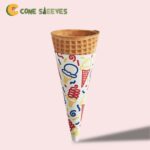 Sugar Cone Sleeves
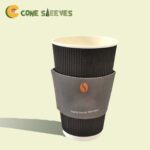 Custom Printed Coffee Sleeves
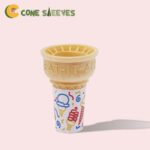 Cake Cone Sleeves
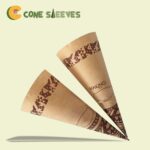 Cardboard Cone Sleeves
 Black Cone Sleeve
 Child Size Waffle Cone Sleeves
 Paper Cone Sleeves
 Small Cone Sleeves
 Eco-Friendly Cone Sleeves
 Aluminum Foil Cone Sleeves
 Two Color Cone Sleeves
 White Cone Sleeve
 Polka Cone Sleeves
 Abstract Cone Sleeves
 Rolled Cone Sleeves
 Chicken Cone Sleeves
 Custom Waffle Trays
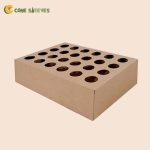 Ice Cream Cone Holder
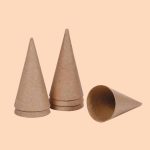 Paper Mache Cones
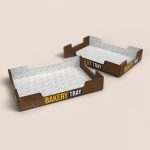 Custom Bakery Trays
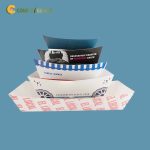 Custom Cardboard Food Trays
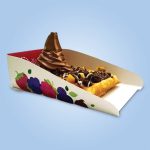 Custom Dessert Trays
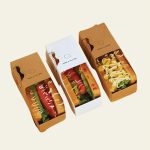 Custom Hot Dog Trays
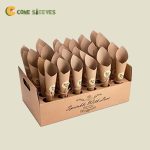 Ice Cream Cone Tray
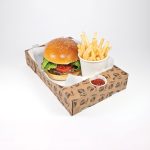 Custom Burger Trays
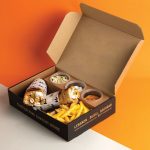 Custom Combo Meal Trays
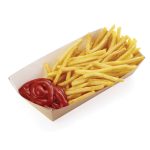 Custom Fries Trays
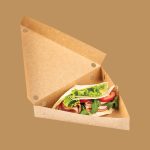 Custom Crepe Trays
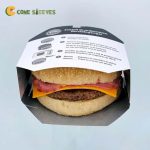 Burger Sleeves
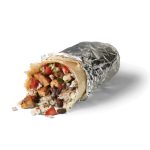 Custom Burrito Sleeves
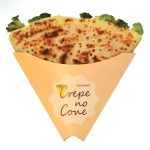 Custom Crepe Sleeves
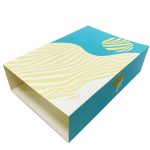 Custom Dessert Sleeves
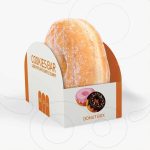 Custom Donut Sleeves
 Custom Tray And Sleeves
 Food Sleeves
 Chocolate Bar Sleeve Packaging
 Custom Bento Sleeves
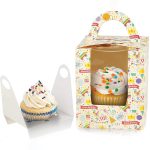 Custom Cupcake Sleeves
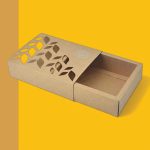 Custom Die-Cut Sleeves
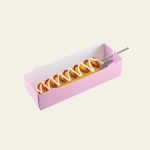 Custom Hot Dog Sleeves
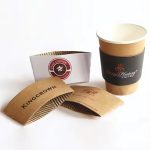 Custom Cold Drink Sleeves


What Printing Adds to a Paper Cup
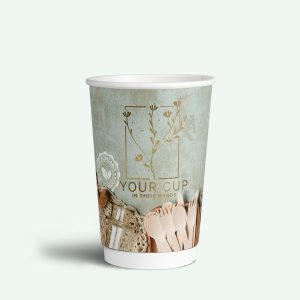
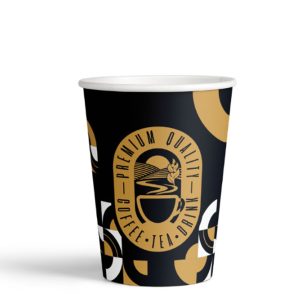
A printed paper cup is any cup that carries a design, from a single logo to a full wraparound illustration. The difference from a plain cup sounds obvious, but it changes how the cup is used. A plain cup is a container. A printed cup is a container, a sign, a menu board and sometimes a ticket. It can hold a QR code for a loyalty app, a promo code for the next visit, a seasonal message or a sponsor's name.
The businesses that order printed cups range widely: cafes and bakeries, of course, but also cinemas, sports stadiums, festival organizers, schools, hospitals, office canteens and brand agencies running sampling tours. What they share is a need to put something specific in front of people at the moment they are holding a drink.
Choosing a Print Approach
Print decisions affect how the cup looks, how much setup it needs and how often you can change it. Here is how the main options compare.
| Approach | What it gives you | When to choose it |
|---|---|---|
| Digital printing | Full color, quick setup, easy design changes | Short runs, many designs, seasonal tests |
| Offset printing | Very consistent color across large quantities | Long runs of one design, chain stores |
| CMYK full color | Photos, gradients, illustrations | Artwork with many colors or soft blends |
| PMS spot color | Exact brand color, solid look | Logos and flat colors that must match signage |
| Full wrap | Design covers the whole cup wall | Patterns, scenes, campaign artwork |
| Spot logo | One or two placed marks | Clean, minimal brands; lower ink use |
For a business that changes designs often, short digital runs are useful. For a standard everyday cup that will be reordered for years, offset with PMS colors keeps every batch the same.
Designing Artwork That Survives the Cup Shape
A cup is a cone, not a cylinder, so the flat artwork is printed on a curved fan shape before the cup is formed. Straight lines across the design will curve slightly; text set in a straight row will arc. Our team lays artwork onto the correct template, but it helps to know this when you plan the design. Patterns, scattered icons and vertical elements handle the curve best.
Plan around the seam, where the paper overlaps and is glued. Small text or a face across the seam will look broken. Put the key element opposite the seam and let the pattern carry across it. Remember that the bottom third is often under a hand or a sleeve, so keep the most important content in the upper half.
Add a bleed area to the artwork so the color runs right to the rim and the base without white gaps. If you are not sure how to prepare files, our free design help will set it up.
Finishes That Change the Look
- Gloss coating makes colors more saturated and is easy to wipe.
- Matte coating feels soft and gives a calmer, modern look.
- Spot UV puts shine on one element, such as a logo, against a matte background.
- Foil stamping in gold, silver or rose gold adds a metallic accent printing cannot match.
- Embossing raises part of the design so it can be felt as well as seen.
Printing the sleeve rather than the cup is another route, and our printed coffee sleeves for paper cups work with plain stock you may already have.
Using Printed Cups for Campaigns
Printed cups are a cheap way to run a short campaign. A cafe can print a limited run of 100 or 200 cups for a new drink launch. A festival can print the lineup on its cups. A brand can run a sampling tour with cups that carry a discount code. Because the minimum is 100 units, it is realiztic to test an idea before committing to a big run. For food alongside drinks, printed wrap such as our custom printed food paper for wrapping can carry the same campaign art.
Picking Cup Stock for Printing
The board under the ink matters as much as the artwork. White board gives the truest colors and the widest range, so it is the default for full-color designs. Kraft board gives a natural look, but bright colors need a white ink base on it, and photos will look warmer. Recycled board sits in between. If your design depends on exact colors, white board with PMS inks is the safest choice.
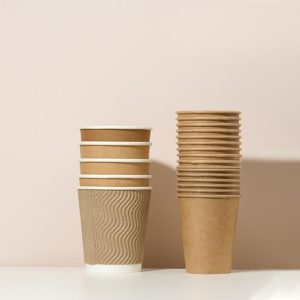
The wall type affects printing too. Single-wall cups are printed directly. Double-wall cups have a separate outer wrap, which gives a smoother, more even print surface and hides the inner seam. Ripple-wall cups have a textured surface that suits patterns more than photos, since the ribs break up fine detail. Our page on paper cup wall structures shows the three builds side by side.
When in doubt, ask for a free sample of two stocks printed with the same design. Seeing them side by side on your counter settles the choice quickly.
Ordering Printed Paper Cups
- Decide on full wrap or spot logo, and full color or PMS.
- Choose sizes from 4 oz to 24 oz and single, double or ripple wall.
- Send your artwork, or brief our designers on the campaign. Design help is free.
- Review the digital proof and a 3D mockup; ask for a free sample if needed.
- Approve, and printing takes 4–6 business days. Rush production is available.
Shipping is free to the USA, Canada, UK and Australia, and larger quantities lower the cost per cup.

Reviews
There are no reviews yet.